What does mold remediation in McLean, VA involve?
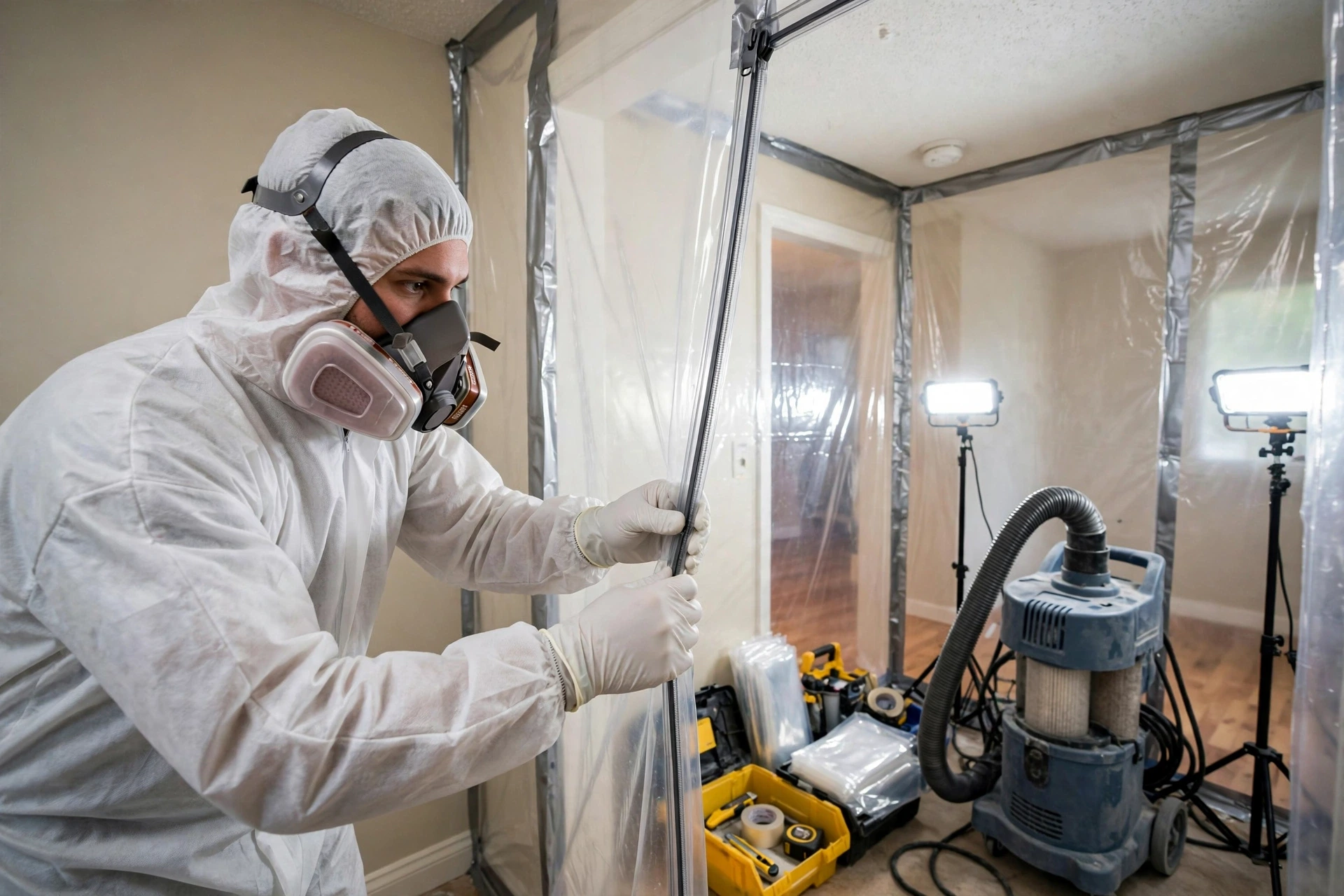
Mold removal & remediation McLean is a structured job, not a spray-and-pray. For a typical finished basement in Chesterbrook or a family room addition in Pimmit Hills, our process follows the industry standard of care (IICRC S520): we seal the work area with containment barriers, run HEPA-filtered negative air pressure so nothing drifts into the rest of your home, remove affected materials that can't be salvaged, HEPA-vacuum and clean what can, and then address the moisture source that started it all.
Why do McLean homes need the moisture fixed first?
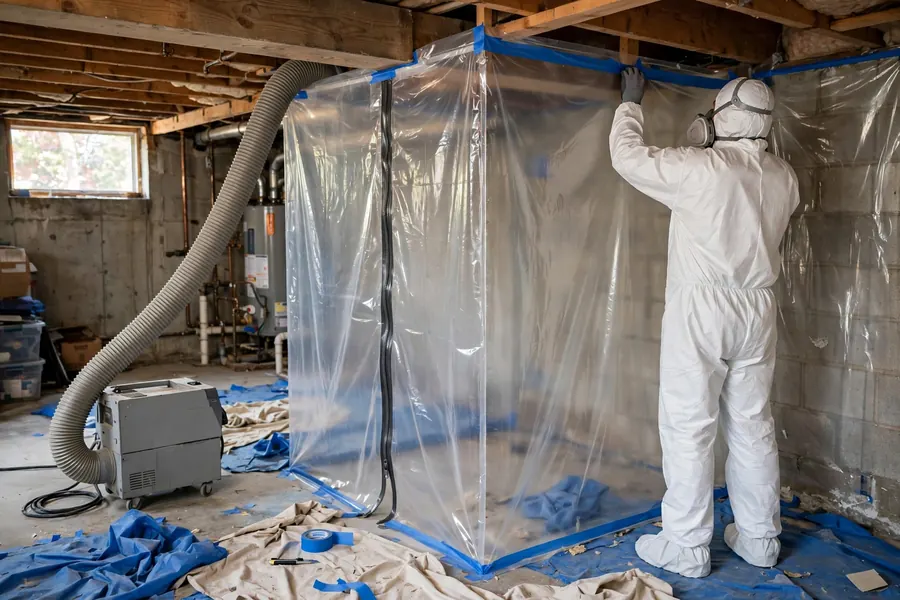
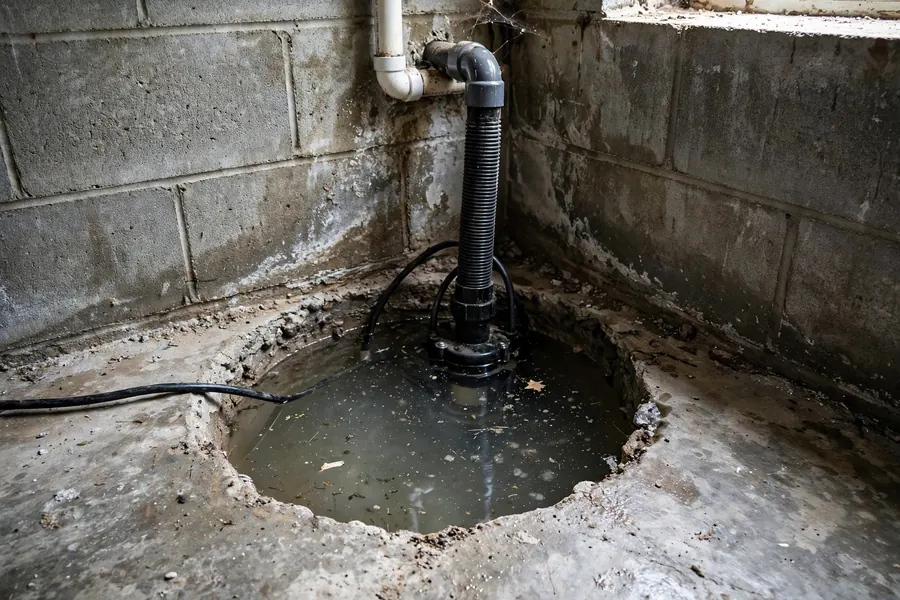
Because mold comes back whenever moisture comes back — and most remediation calls we get inside the Beltway trace back to a short list of local culprits. Sump pumps that quit during a spring nor'easter. Grading on sloped lots in Lewinsville and Potomac Hills that sends stormwater toward the foundation instead of away. Aging HVAC condensate lines in 1960s brick colonials along Old Dominion Dr that drip all summer. Bath fans venting into attics instead of outside. We find the source during the detailed inspection and build its correction into your written scope — because remediation without a moisture fix is just expensive landscaping for the next colony.
What should a remediation scope include?
Any serious company should put this in writing before starting: the containment plan, the areas and materials affected, what gets removed versus cleaned, the HEPA filtration setup, the moisture correction, and the verification step at the end. If a quote is a single number on a napkin, that's your sign to keep looking — especially in Virginia, where mold contractors aren't licensed and the quality bar is set entirely by the company you hire.
What your paperwork file contains when we finish
When the job is done, you get a file, not just a dry room — the written scope, before-and-after photos, moisture readings, and the clearance report. For a buyer or seller, that file is what your agent attaches to the negotiation: it shows what was found, what was removed versus cleaned, what moisture fix was made, and that an independent party verified the result. Keep it with the sale file — it is the document that answers the next inspector’s questions before they are asked.
For an insurer, the same file is the claim file: the written scope with the moisture source named, dated before-and-after photos, moisture readings, and the independent clearance report — the documents an adjuster asks for before final payment.
For a landlord, it is the tenant file: the inspection report, the moisture map, the scope, and a reinspection report stating no visible mold after the work — the record that shows the problem was handled, not just noted.
Can mold remediation be done without disrupting our schedule?
Yes. Our clients are often out the door before 8 a.m. and back after 7, so we work clean — shoe covers, sealed zones, daily cleanup — and keep you updated by text or email with photos, so you can approve progress from the office. Most families stay in the home throughout mold remediation McLean projects; the contained area is simply off-limits until final verification.
How do occupied McLean colonials change the remediation plan?
Most of our McLean remediation happens in lived-in homes — Chesterbrook brick colonials from the 60s and 70s, Lewinsville split-levels, Pimmit Hills ramblers with later additions. Nobody is moving out for the work. So the plan is built around daily life: containment barriers with zippered entries instead of sealed tombs, work sequenced so bedrooms and kitchens stay usable, the noisiest removal scheduled mid-day, and a crew that treats your hallway like a hallway, not a job site. In finished basements that double as home offices, we coordinate the loudest hours around your meeting calendar.
The housing stock also shapes the technical plan. Older plaster walls behave differently from modern drywall when we decide what can be cleaned versus what must come out. Additions grafted onto 1950s ramblers hide seams where moisture travels between the old and new structures. Split-levels stack wet zones — laundry over garage, baths over family rooms — so one leak can surface two floors from its source. We map all of that during the inspection, so your scope reflects your actual house, not a template.
The Real Remediation Process, Step by Step
Ask ten companies what their process is and you'll hear ten versions — most of them vague. The industry standard (IICRC S520) is specific, and it's worth knowing what a proper job actually looks like so you can tell the difference. The core principle, repeated across every credible source we follow: physical removal of contaminated material is the job. Spraying, fogging, or "killing" growth without removing it is not remediation — it's a cosmetic treatment that leaves dead spores and residue behind, which remain allergenic. As Wonder Makers Environmental CEO Michael Pinto puts it: "Killing mold, but leaving the residue in place, is not acceptable."
Inspect & Map
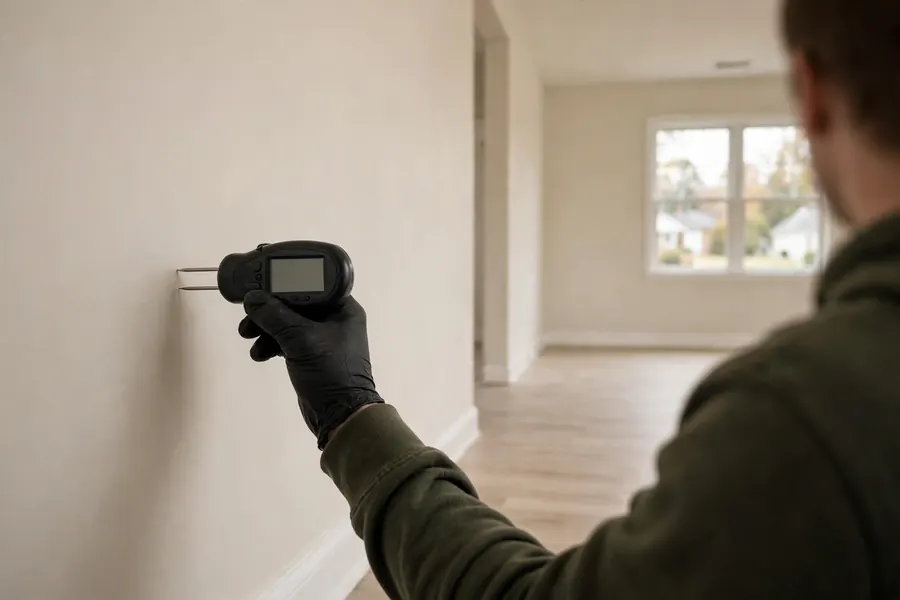
Visual inspection plus pin moisture meters and thermal imaging to find hidden dampness. Air samples (spore traps) with 24–48 hr lab turnaround set the baseline.
Fix the Moisture First
S520's first rule: permanently eliminate the water source. A reputable crew won't start work until the leak, drainage, or condensation issue is actually corrected.
Contain
Double layers of 6-mil polyethylene sheeting seal the work zone, with a zippered airlock entry. When colonies get disturbed they release millions of spores — containment keeps them out of your living space.
Negative Air + HEPA
HEPA-filtered machines (99.97% capture at 0.3 microns) run continuously, cycling the zone's air at least 4 times per hour — with exhaust ducted outside the building, not recirculated.
Remove & Clean
Porous materials (drywall, insulation) get cut out 2 feet past visible growth — hyphae extend beyond what you can see. Wood framing is cleaned, not demolished, unless structurally compromised.
Antimicrobial
Applied after physical removal, never instead of it. Pros use products like Concrobium, Microban, or Shockwave as a final treatment on cleaned surfaces.
Structural Drying
Dehumidifiers and air movers run with daily moisture checks until framing reads dry. This takes days, not hours — walls don't get closed until the wood is ready.
Verify
An independent check — visual, moisture readings, and air samples compared against outdoor baseline — before containment comes down. A written clearance gates any rebuild.
What Remediation Does NOT Include
Half the disputes in this industry come from mismatched expectations. Here's what the work covers — and what it honestly doesn't:
- Rebuild is a separate job — the #1 surprise. Remediation means removal, cleaning, drying, and verification. Putting back drywall, tile, paint, and trim is reconstruction, and in our market it routinely costs about as much as the remediation itself. Any quote should state clearly where remediation ends and rebuild begins.
- Killing is not removing. Fogging or spraying kills growth but leaves dead spores, residue, and mycotoxins in place — and dead mold remains allergenic. The EPA is explicit: "it is not enough to simply kill the mold. It must also be removed." If a company proposes fogging instead of physical removal, that's not a remediation plan.
- The moisture fix is usually a separate trade. We identify the source and document it, but the actual plumbing repair, roof work, regrading, or ventilation correction is typically done by a plumber, roofer, or landscaper. Budget for it separately — a $3,000 cleanup can sit on top of a $2,000–$10,000 leak repair.
- Nobody can "mold-proof" your home. Spores are ubiquitous in outdoor air; the goal is restoring normal indoor levels, not zero. Post-job air samples are compared against an outdoor control taken the same day — there is no federal numeric pass/fail threshold, and "zero spores" is not a real expectation.
Cost Factors in McLean
Restoration contractors have a saying homeowners repeat back to us: "We don't price mold. We price access." A patch of growth on an exposed basement wall and the same patch buried behind finished walls, insulation, or a 3-foot crawl space are completely different jobs. These are the ranges we see for mold remediation McLean jobs across Northern Virginia (remediation only — rebuild separate):
| Area | Typical range | Why it varies |
|---|---|---|
| Bathroom / kitchen | $500 – $2,000 | Easy access, minimal demolition |
| Attic / roof deck | $1,800 – $8,000 | Insulation removal; roof repair is separate |
| Basement | $2,500 – $8,000 | Moisture source often still unresolved |
| Crawl space | $3,000 – $10,000 | Tight clearance, vapor barriers, physical toll |
| HVAC / ductwork | $3,000 – $10,000 | Specialized equipment; system shutdown required |
| Whole house | $8,000 – $25,000+ | Multi-room, 1,500+ sq ft with systemic moisture |
What moves the number: accessibility (exposed wall vs. behind finished surfaces can triple the per-foot cost), whether the moisture source repair is included (usually it isn't — budget separately), structural involvement ($50–$150/sq ft more if framing is compromised), and independent testing/clearance ($300–$800). One r/HomeImprovement homeowner's $7,200 quote covered ~180 sq ft of ceiling and bath — remediation only, no rebuild — plus $900 in asbestos testing their 1990s home required. Always ask what's in the number. Our McLean mold removal cost guide breaks the same ranges down by area and access.
Typical job timeline
A small bathroom with no structural involvement can finish in 2–3 days; a crawl space with joist involvement runs 1–2 weeks. Mold starts growing within 24–48 hours of a water event — that's why the first call matters more than the third quote.
McLean-Specific Challenges
McLean's housing stock shapes every job we scope. The 1960s–70s brick colonials, split-levels, and brick ranchers that dominate close-in Fairfax County were built with brick veneer over wood framing, plaster or early-drywall interiors, and below-grade basements — and after 50+ years, the exterior waterproofing is often degraded, grading slopes toward the foundation, and soft clay backfill holds water against basement walls. The Washington metro's 40–43 inches of annual rain and 60–70% summer humidity keep the moisture load high year-round. Finished basements — the most common place we work — are also the highest-risk: porous drywall, carpet, and insulation colonize fast once wet.
⚖ Virginia law: certification is legally required
Virginia law (HB 1270, updated by HB 2195 in 2025) makes it a Consumer Protection Act violation to sell residential remediation work without holding mold remediation certification from a nationally or internationally recognized certifying body (the IICRC is one qualifying option). The original bill passed both chambers unanimously.
What that means for you: in Virginia there is no state mold license — but IICRC certification is legally required to sell this work. When you're comparing companies, "are you IICRC-certified for this work?" is the single most useful question you can ask. It's also why S520-style source removal (not fog-and-spray) is the only approach that aligns with both EPA guidance and Virginia law.
Red Flags: Which Contractor to Avoid
This industry has a trust problem — a DC-area homeowner on a local forum summed up the skepticism bluntly, and honestly, some of it is earned. Here's what to walk away from:
Fogging-only pitch
Fogging as the entire job — no removal, no containment. Dead spores stay allergenic; the colony inside the wall is untouched.
No real containment
"Just close the door" is not containment. No poly sheeting, no negative air, no sealed entry = spores through your whole house.
Tests + remediates
The same firm finding the problem, testing it, and selling the fix is a textbook conflict of interest. Independent assessment protects you.
Single-number quote
No written scope, no containment plan, no removal-vs-cleaning decisions, no verification step. A price without a plan is a guess.
"Expand as we go"
Vague expand-once-inside language is a blank check unless the contract defines measurable triggers — moisture readings, visible spread, subfloor condition.
Toxic-mold scare tactics
"DIY will turn this into a financial and health disaster" is the scam signature, per homeowner forums. Real pros explain; scammers frighten.
Out-of-state crews
Storm-chasers with no local licensing to check and no local accountability when something goes wrong six months later.
Can't name their standard
Ask "what standard do you follow?" If the answer isn't IICRC S520 — or they can't answer — keep looking. (Now also the law in Virginia.)
Bleach as the plan
EPA doesn't recommend bleach as routine practice — on porous materials the water soaks in while chlorine evaporates, feeding growth deeper.