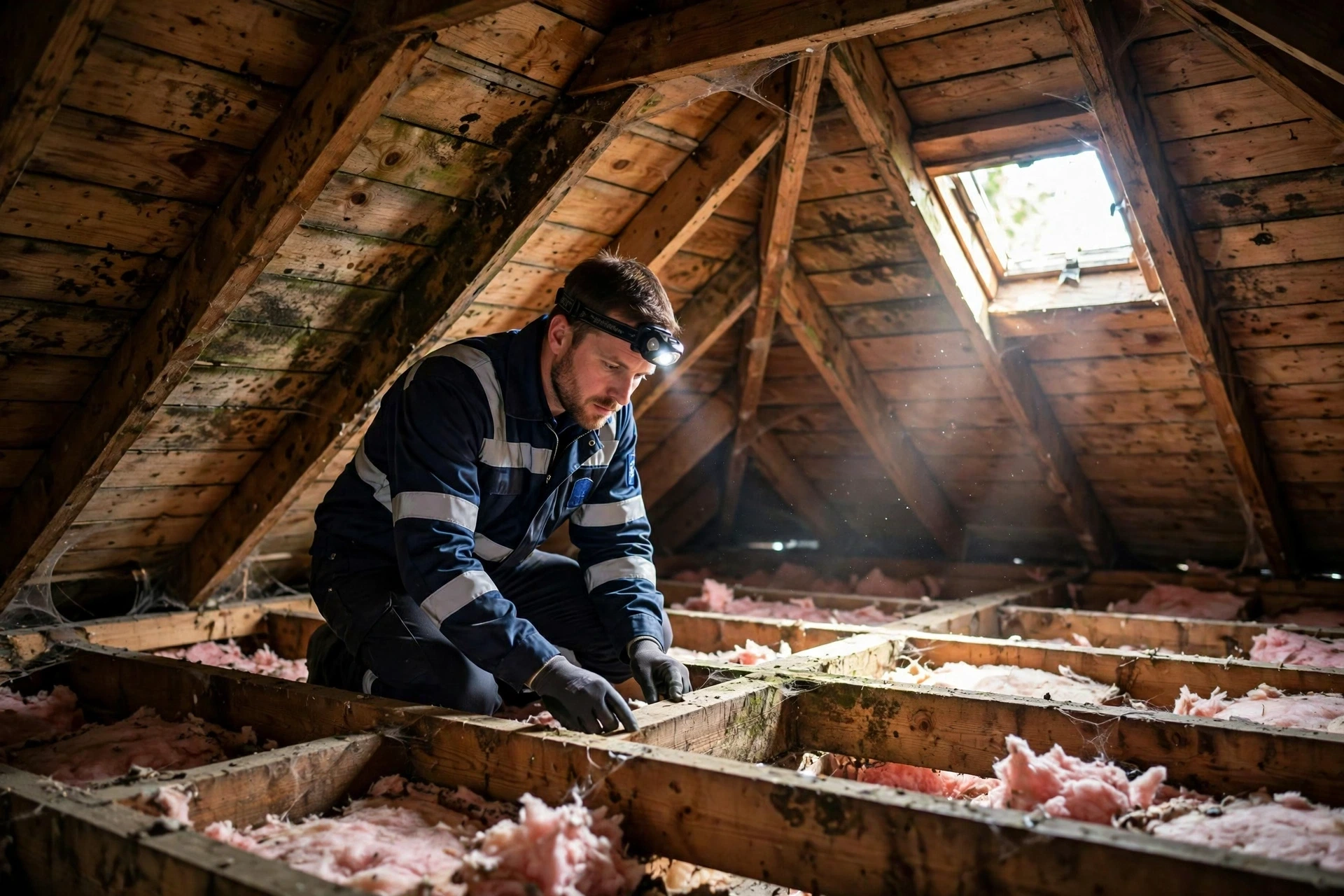
What causes attic mold in older McLean, VA homes?
It's not usually the dramatic roof leak — it's the bath fan. In 1950s–70s colonials and ramblers from Chesterbrook to McLean Hamlet, bathroom exhaust fans were routinely vented straight into the attic instead of outside. Every shower pumps warm moist air onto cold roof sheathing all winter; come summer, the sheathing shows the classic dark staining across the north slope. We find this weekly. The fix is straightforward — proper ducting to the exterior — but the remediation has to happen too.
Three causes cover most McLean attics, in order. First, a bath fan vented into the attic or a disconnected duct — look for dark staining in a radius around the fan termination. Second, roof flashing or ventilation defects — look for staining at valleys and chimneys. Third, warm house air leaking through recessed lights and ceiling gaps and condensing on cold sheathing in winter — look for widespread staining across the sheathing. The inspection names which one it is before any cleaning starts, because the fix follows the cause.
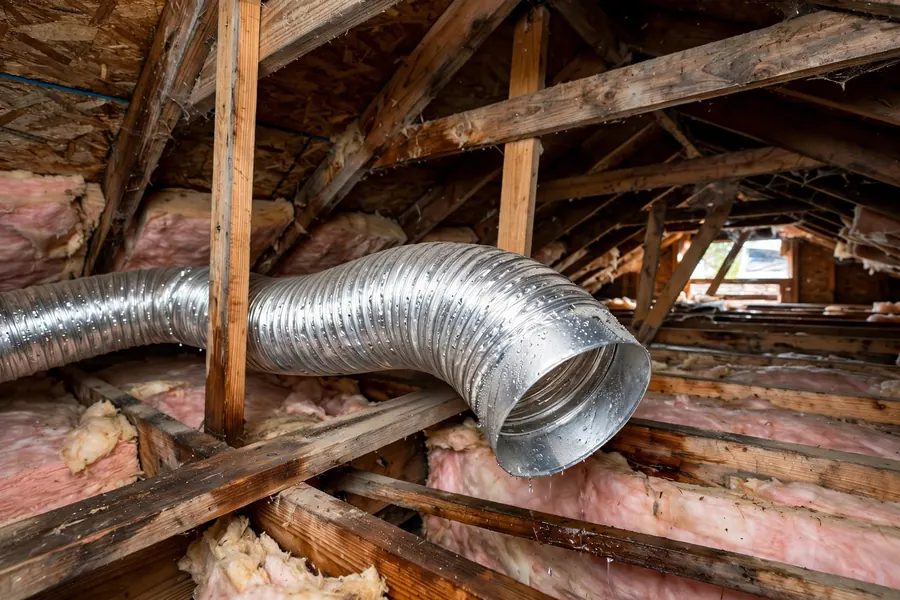
What other moisture sources cause attic mold?
Roof leaks around flashing, valleys, and aging pipe boots after wind-driven rain — common along the Georgetown Pike corridor's older housing stock. Condensation from unbalanced ventilation: blocked soffit vents under new insulation, or a ridge vent installed without intake. And occasionally, the HVAC air handler sweating in an unconditioned attic through NoVA's humid summers. The inspection identifies which one (or which combination) is feeding your growth, because each has a different fix.
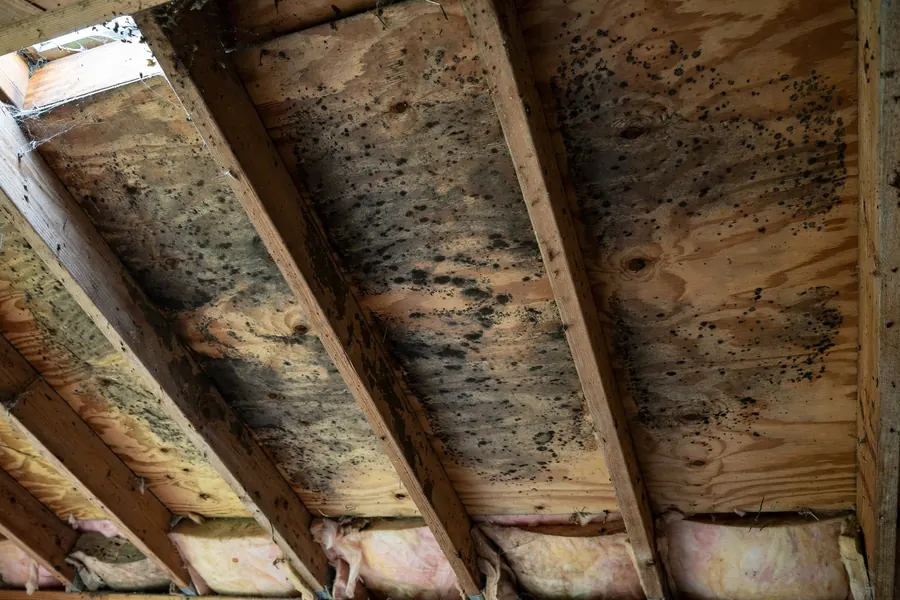
How does attic mold removal work in McLean, VA?
Contained access through the hatch or pull-down, HEPA-filtered negative air, careful cleaning of affected sheathing and framing — attics are usually a cleaning job rather than a tear-out, since roof sheathing is structural. Then the source correction: bath fan re-venting, ventilation balancing, or roofer referral for active leaks (we'll tell you honestly when you need a roofer, not us). Final verification with moisture readings before we close up.
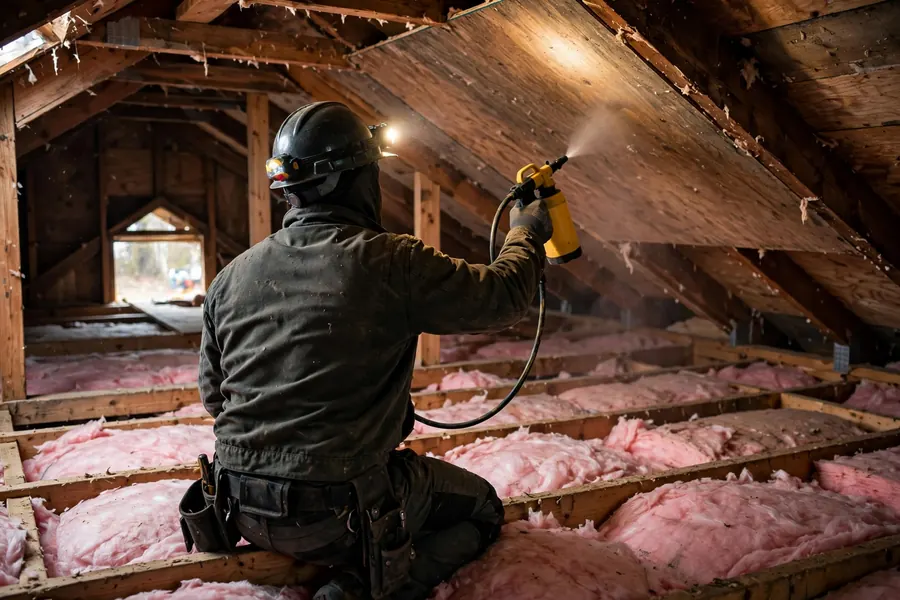
How does attic mold affect a Northern Virginia home sale?
Attic mold is one of the most common flags on Northern Virginia home inspection reports — inspectors photograph the sheathing staining and buyers panic. If you're selling, handling it before listing with documentation in hand turns a deal-killer into a non-issue. If you're buying, a professional scope gives you the real number behind the scary photo.
Why do 1960s–70s McLean attics trap moisture?
The attics over Chesterbrook colonials and Lewinsville split-levels were built in an era of different assumptions: bath fans vented into the attic were standard practice, insulation was thin by modern standards, and soffit vents get buried when homeowners later blow in more insulation. The result is a space that collects moisture all winter — every shower pumping warm air onto cold sheathing — and bakes it all summer. The classic signature is dark staining across the north roof slope, right where the sheathing stays coldest longest.
Ventilation balance matters too. We have seen ridge vents added without intake ventilation, which just moves the problem around, and gable vents sealed during siding jobs. The inspection maps the whole system — intake, exhaust, bath and kitchen vent terminations, and any roof penetrations with tired flashing — because cleaning the sheathing without fixing the airflow is a one-season solution.
What does it cost to reroute a bath fan vent to the exterior?
Rerouting a bathroom exhaust fan from the attic to the exterior typically runs $800 to $1,600 total for a home with two bath fans. That is not a separate luxury add-on — it is the cure for the most common cause of attic growth in McLean's older colonials and ramblers. Here is the part most homeowners are never told: "If you have had mold remediation and your bathroom fan still vents into the attic, the mold is likely to return." Any company that quotes you for sheathing cleanup without addressing the vent termination is selling you a one-season fix.
We flag this during every inspection: if your fan still dumps into the attic, the written scope includes the reroute. If a remediator refuses to address it or says it is "not necessary," get a second opinion.
Soffit + ridge: the balance that actually matters
Attic ventilation works on a simple principle — cool air enters through soffit vents and warm air exits through ridge vents. The intake area should equal or exceed the exhaust area. One without the other disrupts the whole system. The most common failure we see in McLean: homeowners blow in extra insulation and bury the soffit vents, trapping humid air exactly where it does the most damage.
| Ventilation issue | What happens | How we check it |
|---|---|---|
| Blocked soffit vents | Humid air trapped; sheathing stays wet all winter | Attic inspection + insulation-depth check |
| Ridge vent without intake | No airflow loop; moisture recirculates | Vent-area ratio calculation |
| Baffles missing | Insulation creeps over soffit openings over time | Visual check at eaves |
| Gable vents sealed during siding | Cross-ventilation lost unexpectedly | Exterior + attic walkthrough |
Fixes include foam or cardboard baffles to keep insulation off the soffit vents — a small detail with outsized effect. Attic relative humidity sustained above 60% is the mold-risk threshold; air sealing (plumbing vent pipes, electrical penetrations, the attic hatch) matters even more than ventilation, because the stack effect drives warm moist air from the living space straight onto cold roof sheathing all winter.
How do professionals actually clean attic sheathing?
Not all attic remediation methods are equal — and the cheapest is rarely the best value. Here is what the options actually mean:
| Method | Typical cost range | What it does |
|---|---|---|
| Dry-ice blasting | $3,000–$8,000 | "Gold standard" for wood framing — blasts growth off without damaging sheathing |
| Wire brushing / sanding | $1,000–$3,000 | Manual abrasion; effective on accessible surface growth |
| Chemical fogging only | $400–$800 | Does not remove growth at the root — often temporary without physical cleaning |
Fogging alone, with no physical removal, is the red flag to watch for in quotes. Mold on porous wood has roots; a fog coat without brushing or blasting is cosmetic. Typical attic remediation in McLean runs $1,000–$6,000, rising toward $15,000 only for full attics with structural or insulation damage. Accessibility is the biggest cost driver — a tight low-pitch attic with roof-deck growth costs far more than an open walk-up space.
After the work: the verification checklist
Before we close up, the scope should be verifiable, not just billable. Here is what we document on every attic job: exhaust ductwork rerouted to the exterior (with the new duct path and exterior hood photographed), fan airflow tested without backdraft, moisture readings taken across the sheathing before containment comes down, and a 6-month follow-up scheduled. If your remediator cannot show you each of these, the job is not finished.