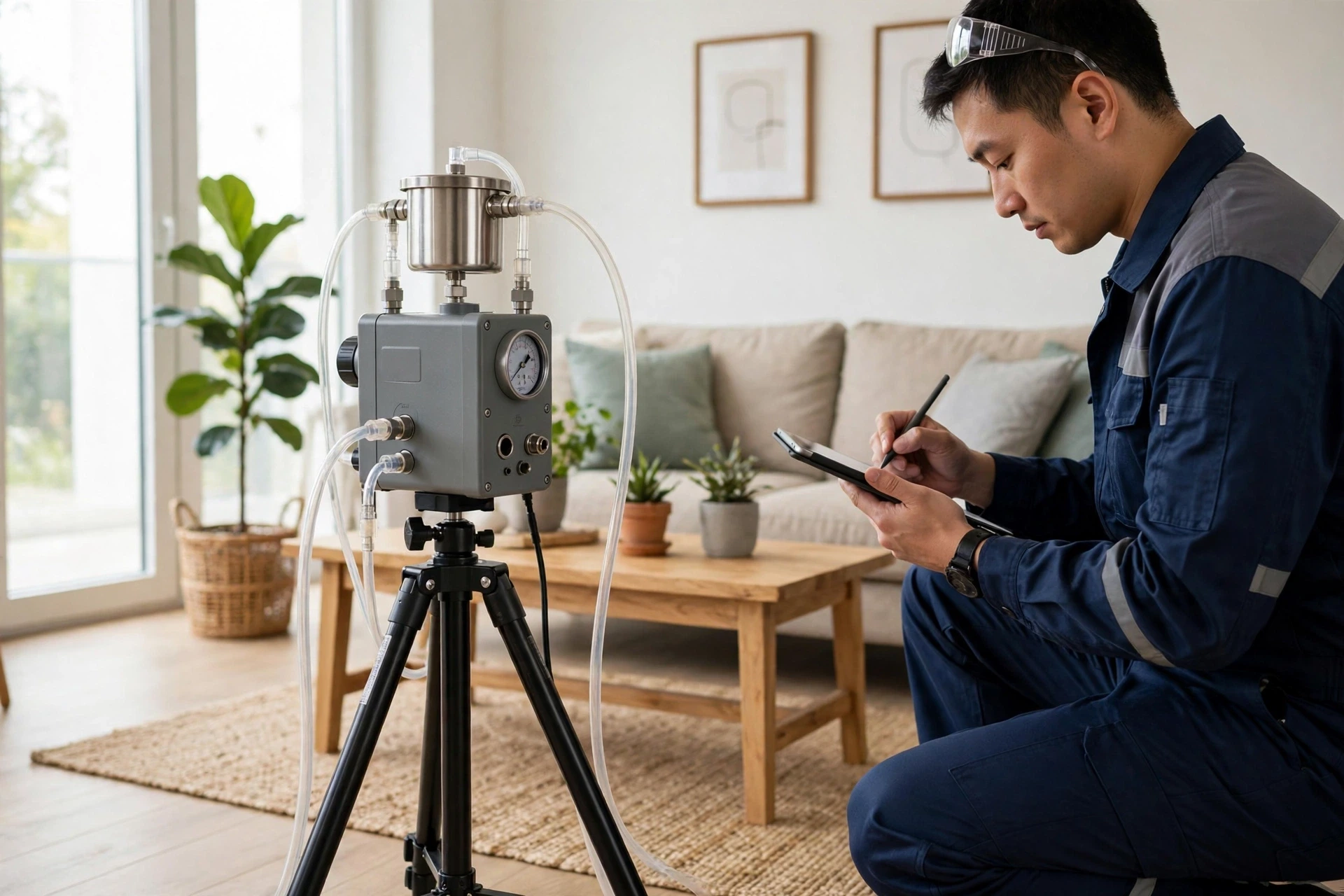
What does mold air quality testing in McLean, VA tell you?
Air sampling captures what's floating in your indoor air at that moment: spore types and concentrations, compared against an outdoor control sample taken the same day. It's genuinely useful in three situations: when you suspect hidden growth (musty odor with nothing visible), when you need documentation for a real-estate transaction, and when you want independent verification after remediation. What it can't do is diagnose a house by itself — a single air sample without a visual inspection is just expensive weather-reporting. That's why every testing job we do starts with our eyes and moisture meters, not just a pump.
The honest limit: there is no federal, EPA, or Virginia limit for airborne mold, so no test can declare a house pass or fail. Results are read against the outdoor control sample and the inspection as a whole — moisture readings, visual findings, and the lab report together. A number without that context is just a number.
When do McLean homeowners need air quality testing?
The most common call: "the basement smells musty but I don't see anything" — often finished space in a Lewinsville or Chesterbrook colonial where growth hides behind drywall. Second most common: real estate. A buyer in Langley wants data behind the negotiation; a seller in Salona wants a clean lab report to attach to the disclosure. Third: post-remediation verification after someone else did the work and you want independent confirmation it worked. We'll tell you honestly if testing will change your plan or just your bill.
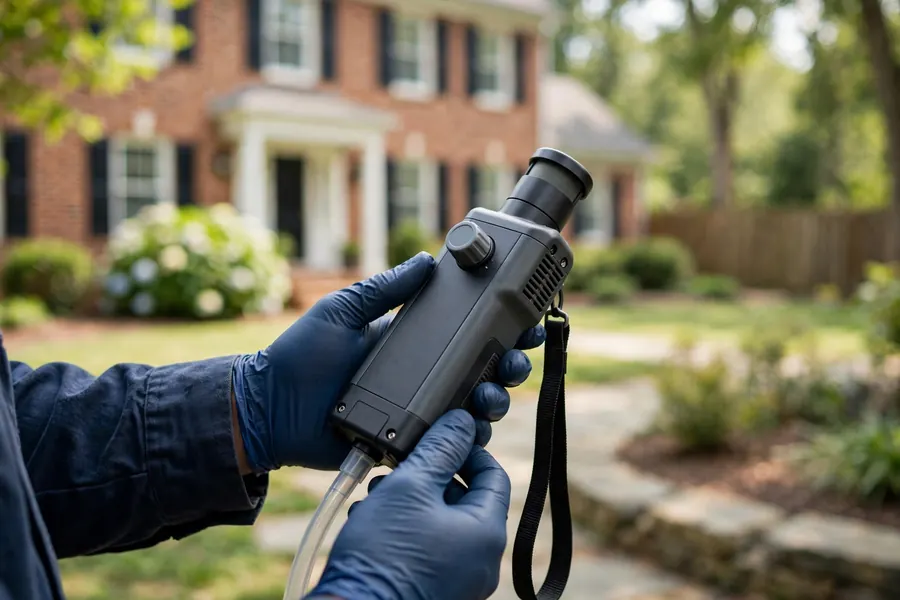
How does professional air sampling work?
We take indoor samples in the areas of concern plus an outdoor baseline, using calibrated equipment and proper chain of custody to an accredited independent lab. Results typically return in a few business days (rush available). Then we sit down — by phone or in person — and explain what the numbers mean in plain English: what's normal background, what's elevated, and what action (if any) the results support. No lab-report jargon dumped on you without translation.
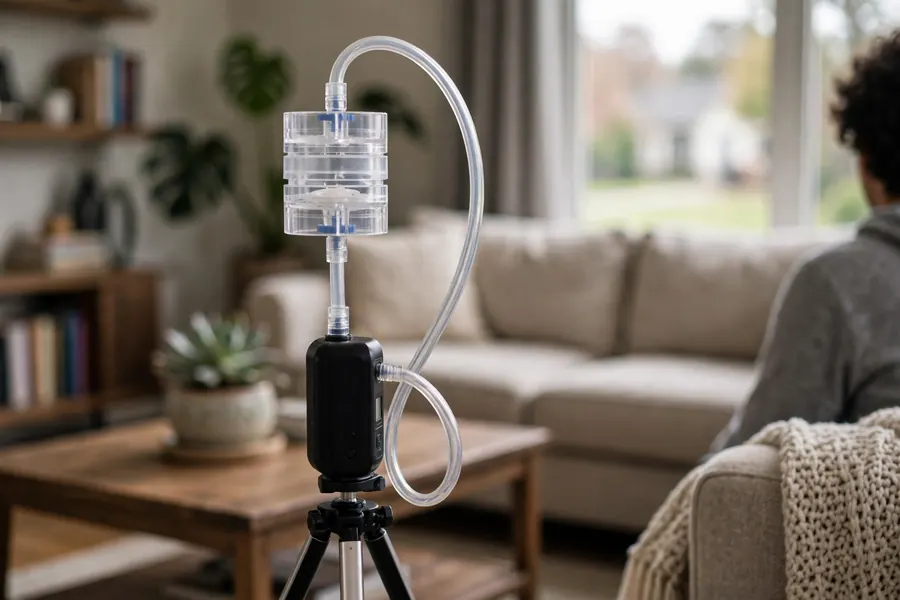
Do I need air testing or just a mold inspection?
If there's visible growth with an obvious moisture source, skip straight to the inspection and remediation scope — testing adds cost without changing the plan. If the situation is ambiguous, the combination of inspection plus targeted testing gives you the full picture. Either way, the inspection itself is thorough and documented.
How does Northern Virginia housing shape indoor air?
The housing stock writes the air-quality story before we ever set up a pump. Aging air handlers in Lewinsville split-levels and Chesterbrook colonials run condensate lines that drip for years inside closets and utility rooms. Ductwork routed through unconditioned attics and crawl spaces picks up whatever those spaces hold and delivers it to every bedroom. In McLean's townhouse and condo pockets — shared walls and stacked plumbing mean one unit's moisture becomes the whole floor's air.
Finished basements add their own chapter: carpet and drywall over cool foundation walls, often with no dedicated return air, so the lower level breathes differently from the rest of the house. That is why our testing pairs every sample with the visual inspection — the numbers tell you what is in the air, but the house tells you why, and the "why" is what gets fixed.
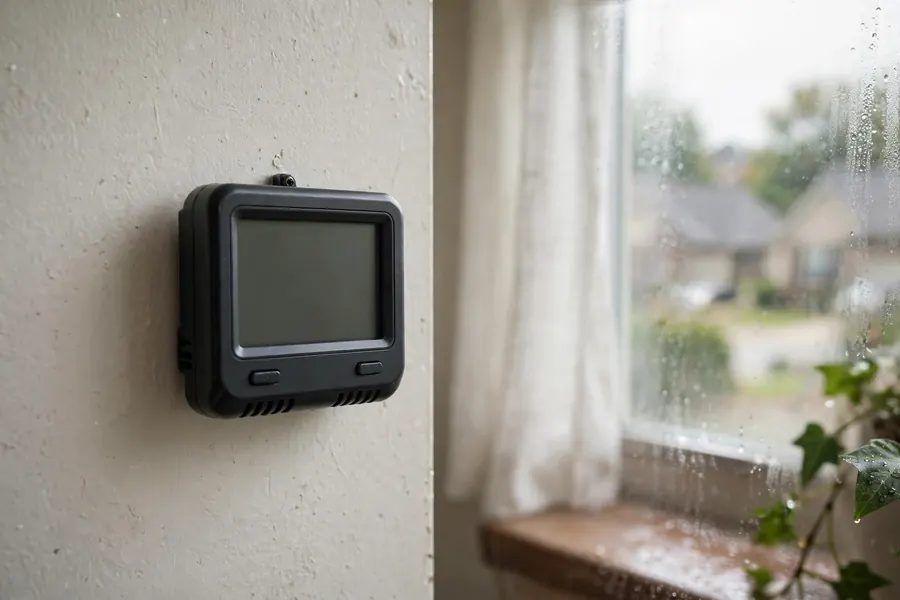
What the EPA actually says about mold sampling
Here is the honest starting point, straight from the EPA: "In most cases, if visible mold growth is present, sampling is unnecessary. Since no EPA or other federal limits have been set for mold or mold spores, sampling cannot be used to check a building's compliance with federal mold standards." The CDC says the same thing in different words: "You do not need to know the type of mold growing in your home, and CDC does not recommend or perform routine sampling for molds. No matter what type of mold is present, you should remove it."
That is not us talking you out of a service — it is the federal guidance. If there is visible growth with an obvious moisture source, the money goes further on inspection and remediation than on lab reports that do not change the plan.
The 4 situations where air sampling IS worth it
Testing earns its keep in exactly four scenarios:
| Situation | Why testing helps |
|---|---|
| Hidden growth you cannot find | Musty odor, no visible source — samples indicate whether an indoor source exists |
| Health-driven concerns | Allergy or asthma occupants; documented data for the physician |
| Real estate / disputes | Independent documentation for transactions, landlord-tenant issues |
| Post-remediation verification | Clearance sampling confirming the work actually worked |
Professional inspection plus sampling runs $250–$800 where it is warranted; inspection alone is $200–$600, and post-remediation clearance is typically $150–$400. If none of the four situations applies to you, we will tell you — and quote the inspection instead.
Spore trap vs ERMI: what the tests actually measure
| Spore trap (air) | ERMI (dust DNA) | |
|---|---|---|
| Measures | Airborne spores per m³ at one moment | DNA of 36 mold species in settled dust |
| Control needed | Outdoor baseline sample, same day | None — index score vs research database |
| Weakness | Snapshot only; one bad outdoor day skews results | Does not reflect current air quality; EPA has not validated it for routine home use |
| Best use | Clearance verification, hidden-source hunts | Home purchase screening, medically vulnerable occupants — alongside inspection |
Spore-trap sampling must always be paired with an outdoor control — without it, the indoor numbers are meaningless. ERMI can detect hidden burden that air sampling misses (one study found half of high-ERMI homes were not flagged by conventional inspection), but it is not useful right after a recent water event, since mold has not yet accumulated in the dust.
DIY test kits: an honest warning
The $10–$50 petri-dish kits from the hardware store are, bluntly, a scare rather than an answer. Mold spores are in the air everywhere — indoors and out — so a dish left open will almost always grow something. A positive result is nearly guaranteed and tells you very little about whether your home has a problem. If you are spending money on testing, spend it on a professional sample with a lab chain of custody, or do not spend it at all.
Never let the remediator grade their own work
For post-remediation clearance, the order is: finish the cleaning, test while containment is still up, rebuild only after passing. And the tester must not be the company that did the remediation — that is a textbook conflict of interest. We send every sample to an accredited third-party lab, and on clearance jobs we recommend (and welcome) independent testers. The first clearance criterion is always visual: the area must be visibly clean, no dust or debris, before any sampling is even appropriate.