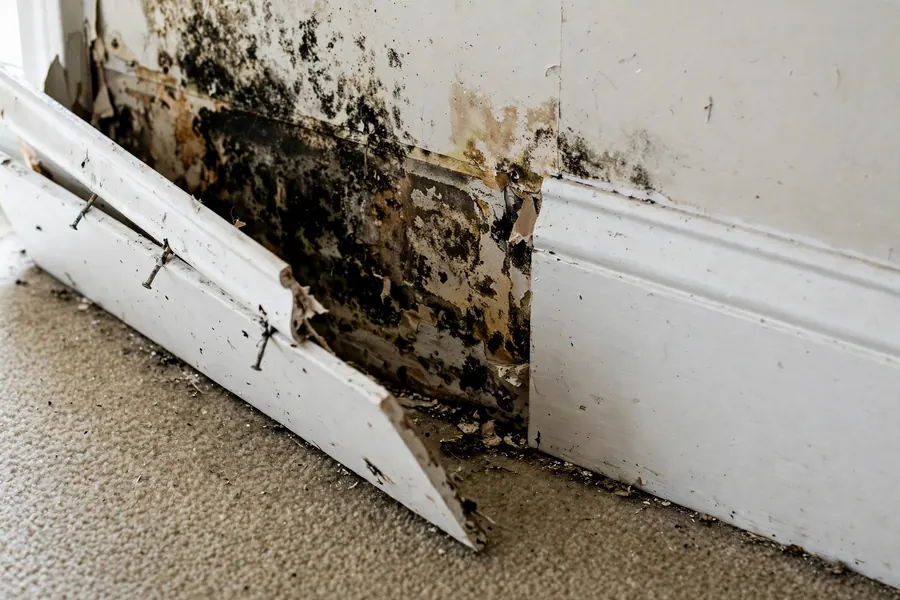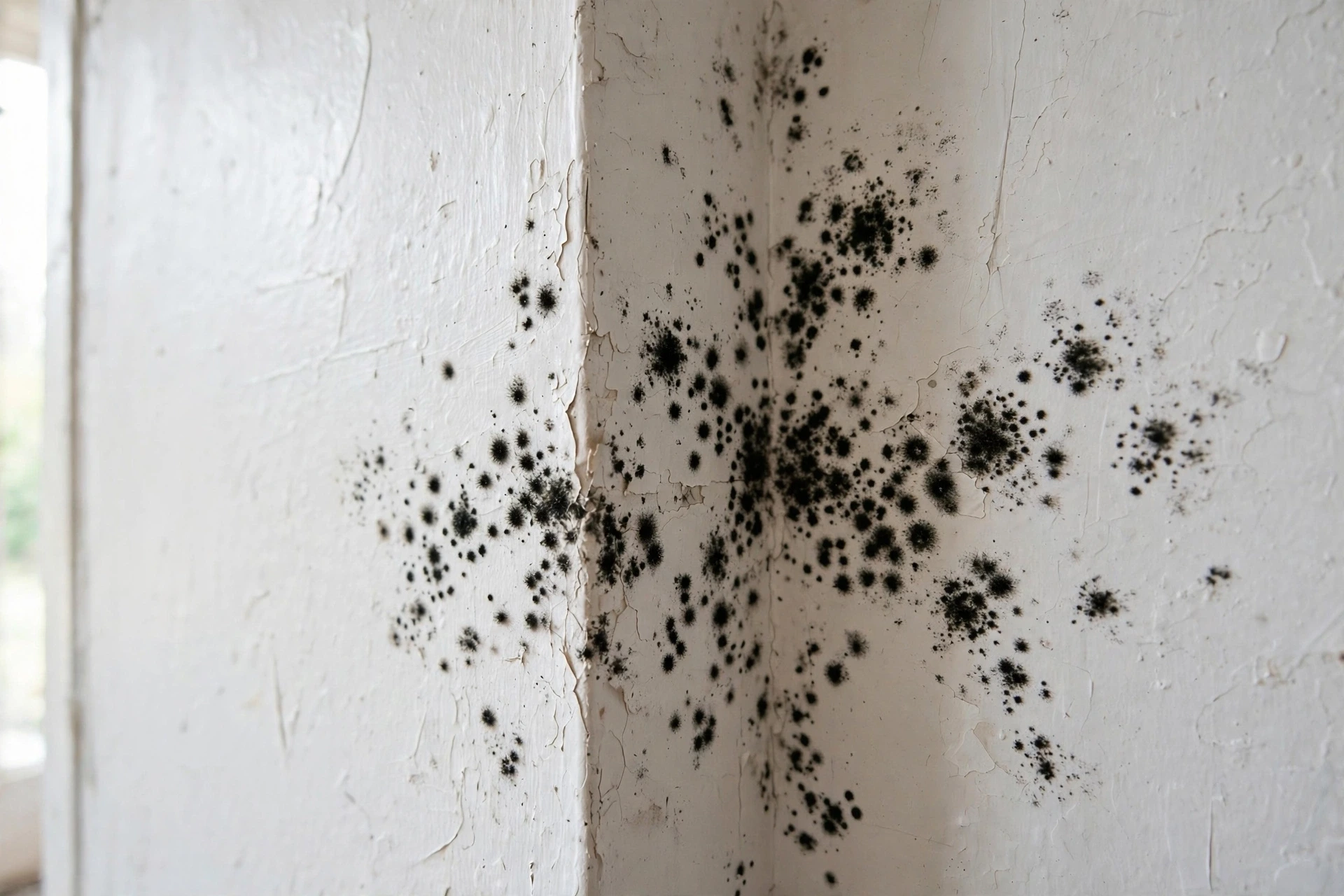
What "black mold" actually is (and isn't)
Here's what the EPA states plainly in its mold course: "black mold" is not a species or specific kind of mold, and neither is "toxic mold." It's a media term — usually aimed at Stachybotrys chartarum, a greenish-black mold that grows on high-cellulose materials like drywall, wood, and paper when they stay wet.
Three facts that change the conversation:
- Many molds look black. Cladosporium, Aspergillus niger, and Alternaria are all commonly dark — and color tells you nothing about species. As Michigan's health department (following CDC guidance) puts it: "Many molds are black in appearance; color does not indicate species."
- No one can tell by looking. The EPA again: "No one can tell whether a mold is producing mycotoxins just by looking at it." Any contractor who diagnoses "toxic black mold" by eyesight is guessing — or selling.
- Stachybotrys needs constant moisture. It's slow-growing and goes dormant without steady wetness. That makes it a useful signal: where it grows, a chronic moisture problem has existed for a while.
What you see is dark growth. What drives the scope is how much of it there is and what has been wet the longest — a small, recent patch and a wall that has been damp for months are different jobs even when the color looks the same. The S520 process — contain, remove colonized porous material, fix the moisture, clean and dry, verify — is the same whatever the color.
What actually determines your plan isn't the color; it's how much there is, where it is, and what moisture is feeding it. Any company that tries to frighten you with the phrase instead of measuring those three things is selling fear, not remediation.
Where did the "toxic black mold" fear come from?
In 1993 and 1994, doctors in Cleveland, Ohio reported a cluster of about ten cases of bleeding lungs in very young infants. Two babies died. The area had seen flooding, and CDC investigators found Stachybotrys in some of the homes. The media ran with it — "fatal fungus" headlines, lawsuits, a national panic that still shapes what people believe today.
Then the science caught up. Here's what happened next:
- 1993–1994 — The Cleveland cluster
About ten cases of acute lung bleeding in infants; two deaths. CDC investigates, finds Stachybotrys in homes, suggests a possible association.
- 1994–1999 — The media frenzy
"Fatal fungus" headlines nationwide. Lawsuits follow. "Toxic black mold" enters the public vocabulary — and the marketing vocabulary of some remediation companies.
- 2000 — The retraction
A CDC-convened panel of outside experts reviews the investigation and finds "serious methodologic shortcomings" — including that Stachybotrys was not even found in two of the homes. The panel concludes the link was "not proven." Harvard fungi expert Dr. Harriet Burge: "The sad thing is we don't know what caused the illness in those babies."
The retraction got a fraction of the coverage the scare did. That's why the fear persists thirty years later — and why a contractor who still leads with Cleveland-era panic is working from headlines, not science.
What health agencies actually say
Strip away the marketing and here's the agency consensus:
What mold can do is well established: trigger allergies (stuffy nose, sneezing, itchy eyes, skin rash), set off or worsen asthma attacks, and in rare cases cause severe reactions in people with serious immune suppression. Toxicologist Ian Musgrave (University of Adelaide) sums up the evidence: "There is no strong evidence mycotoxins from household mold — and in particular black mold — are associated with substantial health issues."
The honest risk ladder looks like this: (1) any indoor mold growth means fix the moisture and remove the mold; (2) hidden or long-term growth is a bigger job because the damage is usually wider than what's visible; (3) households with asthma, allergies, or immune suppression should take it more seriously. Color is not on the ladder.
We don't make medical claims — that's between you and your doctor. Our lane is the building: find the moisture, remove the growth, verify it's gone.
Where does dark mold grow in McLean, VA homes?
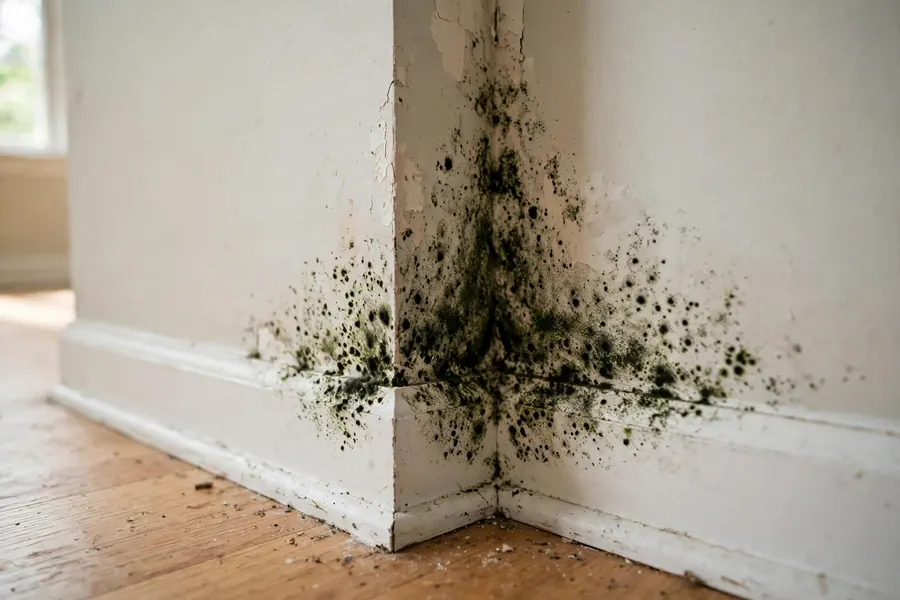
The usual suspects: behind finished basement walls in Chesterbrook colonials where a slow foundation seep went unnoticed, on the back of drywall in Pimmit Hills additions built over vented crawl spaces, around aging HVAC air handlers in Lewinsville split-levels, and in attics where a bath fan has been pumping shower steam into the rafters for years. Dark staining on framing or sheathing is common in homes along the Potomac-facing slopes — humidity plus a small, steady moisture source is all it takes.
How is dark mold removed in McLean, VA?
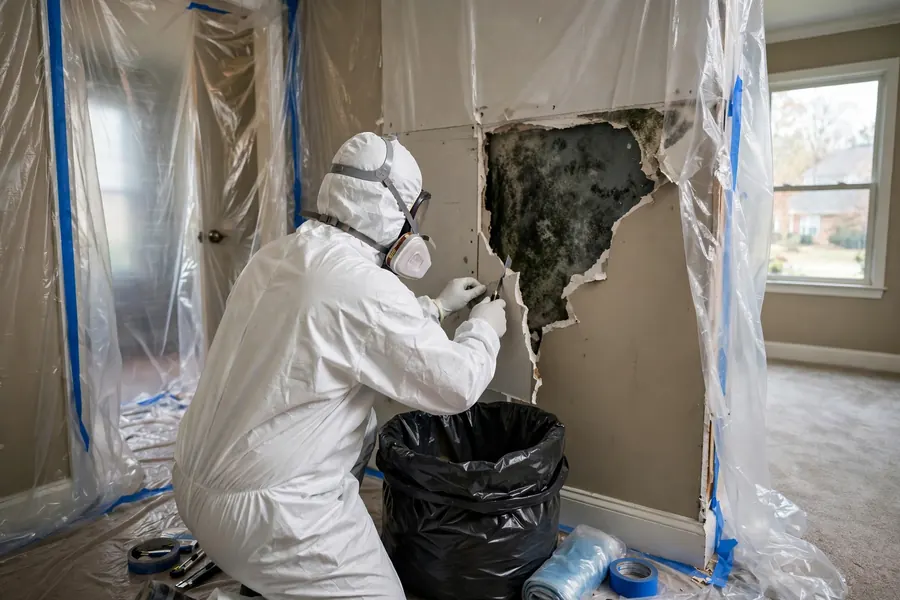
Same disciplined process as any remediation: detailed inspection to map the extent and find the moisture, a written scope with a fixed price, sealed containment with HEPA-filtered negative air, careful removal of what can't be salvaged, thorough cleaning of what can, and correction of the moisture source. If you want lab identification of the species — for a real-estate file or your own peace of mind — we can arrange testing through an independent lab.
Does dark mold need a different removal process?
No — and this is where honest companies separate from fear-based ones. The IICRC S520, the industry's remediation standard, does not differentiate by color or species. The protocol is identical: find and fix the moisture source, set sealed containment with HEPA-filtered negative air, physically remove what can't be salvaged, clean what can, dry everything, and verify with post-remediation checks.
The one real difference (and it's not what you think)
Stachybotrys needs constant moisture and grows slowly. So when it's present, the water problem has usually existed for a while — which often means more hidden damage behind the visible growth. That's a moisture-history signal, not a toxicity upgrade. It tells us to look wider, not charge more.
Also worth knowing: "killing" mold is not remediation. Dead spores and fragments can still carry mycotoxins, and killing does nothing about the moisture that grew it. Removal — physical removal — is the standard.
What should you not do when you find dark mold?
Don't scrub a large area with bleach and no containment — you'll aerosolize spores through the whole house. Don't ignore it because someone told you "all mold is harmless," and don't panic because someone told you the opposite. Get it assessed by someone who measures first and talks straight.
8 black mold myths, debunked
These are the claims we hear most — from the internet, from neighbors, and unfortunately sometimes from competitors. Here's what the science and the agencies actually say:
| The myth | The fact |
|---|---|
| "Black mold" is the most dangerous mold. | Color doesn't indicate species or toxicity. Many black-looking molds are ordinary allergens, and hazardous molds come in many colors. The CDC says to treat all indoor molds the same. |
| Black mold causes brain damage or death. | The CDC, Institute of Medicine, WHO, and AAAAI all report insufficient or no strong evidence linking indoor mycotoxin exposure to severe illness or death. Established risks are allergies and asthma triggers. |
| The Cleveland babies prove it's deadly. | The CDC's own expert panel retracted the association in 2000 after finding serious methodological flaws — including homes where the mold wasn't even present. |
| You need special "black mold removal." | No species-specific remediation exists. The IICRC S520 protocol is identical regardless of color. Anyone selling a special process for the color is selling marketing. |
| Bleach kills black mold. | Bleach doesn't remove mold from porous materials like drywall or wood — and the dead residue stays behind. The EPA advises against relying on bleach; fixing the moisture and removing the material is what works. |
| If it's black, it must be Stachybotrys. | It could be Cladosporium, Aspergillus niger, or Alternaria. Only lab testing identifies species — and the CDC says identification is unnecessary for removal decisions anyway. |
| Small black spots are an emergency. | Small surface growth (under ~10 sq ft) on hard surfaces is EPA DIY territory with proper precautions. The real concern is chronic, hidden growth behind walls — which is usually discovered, not spotted. |
| A "black mold surcharge" is normal. | There is no legitimate per-species surcharge. Cost comes from containment scope, access difficulty, and square footage — not color. A flat black-mold fee is a red flag. |
What it costs: the honest truth
Black mold jobs in our market typically run $500–$6,000 depending on severity — but that range describes scope, not species. Here's how legitimate pricing actually breaks down:
| Scope | Typical range | What drives it |
|---|---|---|
| Small contained area (bathroom, closet) | $500–$2,000 | Access, containment size, surface vs. porous material |
| Single room / partial basement | $2,000–$6,000 | Drywall removal extent, HVAC involvement, drying time |
| Whole basement or multiple rooms | $6,000–$15,000+ | Full containment, structural drying, rebuild coordination |
| Testing (pre/post, if needed) | $300–$600 per round | Number of samples, lab turnaround |
No "black mold premium" — and beware anyone who charges one
We don't charge extra because mold is dark. No honest company does. Cost comes from containment scope, access difficulty, and how much material must come out — the same factors for any color. If a quote includes a flat "black mold fee" or a 15–25% "toxic" surcharge, that's fear pricing, not remediation pricing. Get a second opinion.
Where does dark growth hide in different Northern Virginia house types?
House type predicts hiding spots. In Chesterbrook-style colonials with finished basements, dark growth hides behind the drywall where a slow foundation seep feeds it for months — the wall looks fine until the baseboard tells the story. In Pimmit Hills ramblers, it is the vented crawl space under the addition, or the back of drywall in a converted garage. In Lewinsville split-levels, check around the aging air handler and the laundry plumbing wall. In older attics everywhere, the north-facing sheathing slope above a bath fan that has been venting into the rafters for years.
The pattern to remember: dark growth follows sustained, quiet moisture — not floods. Floods get noticed. The slow drip from a condensate line, the seep behind a finished wall, the shower steam pumped into the attic for a decade — those are the feeders. That is why our inspection spends as much time on moisture mapping as on the visible growth itself.
Stachybotrys specifically needs constant wetness on cellulose — so in McLean colonials its favorite addresses are predictable: behind tub and shower surrounds where grout has failed, under sink cabinets with slow supply-line drips, basement drywall wicking moisture up from the slab or foundation wall, behind finished-basement walls where grading pushes water in, and inside wall cavities around slow plumbing leaks. If you find dark, slimy-looking growth in any of these spots, the moisture has likely been there for months — plan for the inspection to look wider than the visible patch.