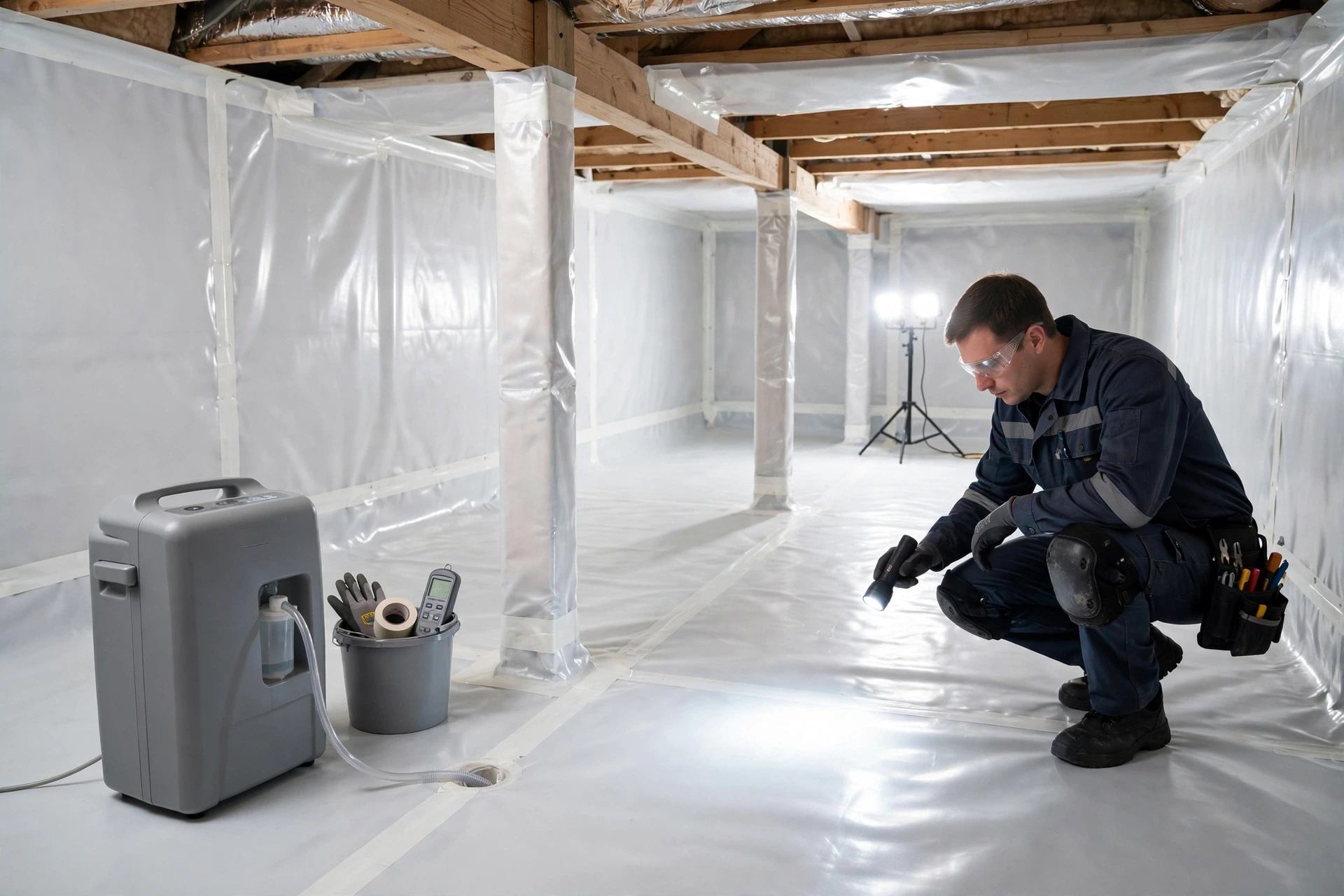
Why do crawl spaces grow mold in McLean homes?
Because warm, humid NoVA summer air flows through the vents of older additions, hits cool ductwork and floor joists, and condenses. Vented crawl spaces under those additions are a McLean-area classic — the family room bump-out on a Pimmit Hills rambler, the expanded kitchen on a Lewinsville split-level, the in-law addition in Chesterbrook. Add a plumbing drip or poor exterior drainage and you have a mold farm under the house that announces itself as a musty smell in the rooms above or springy-feeling floors.
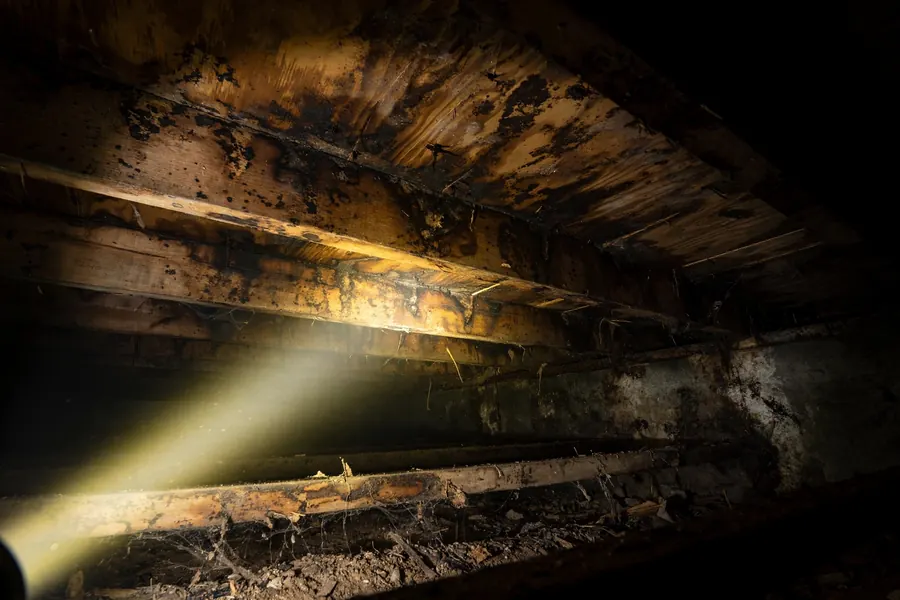
What does crawl space mold removal in McLean, VA involve?
Crawl space work is methodical: contained access, removal of affected insulation and debris, HEPA vacuuming of joists and subfloor, cleaning of salvageable wood, and then the moisture correction that actually matters. Depending on what the inspection finds, that ranges from a properly installed vapor barrier and sealed vents to drainage improvements to full encapsulation with dehumidification. We scope what your crawl space needs — not a one-size package.
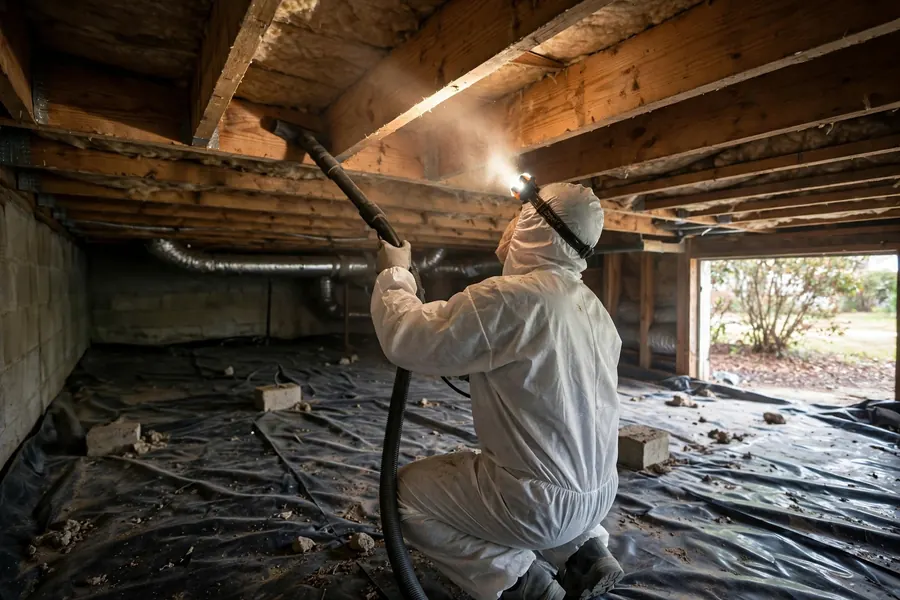
Should a crawl space be vented or sealed in Northern Virginia?
Building science has moved on from the old "vents keep it dry" idea — in our humid climate, open vents often import moisture all summer. But encapsulation isn't automatically right for every house either; it depends on your foundation, drainage, and HVAC setup. During the inspection we'll explain both options for your specific crawl space, with real numbers, and let you decide.
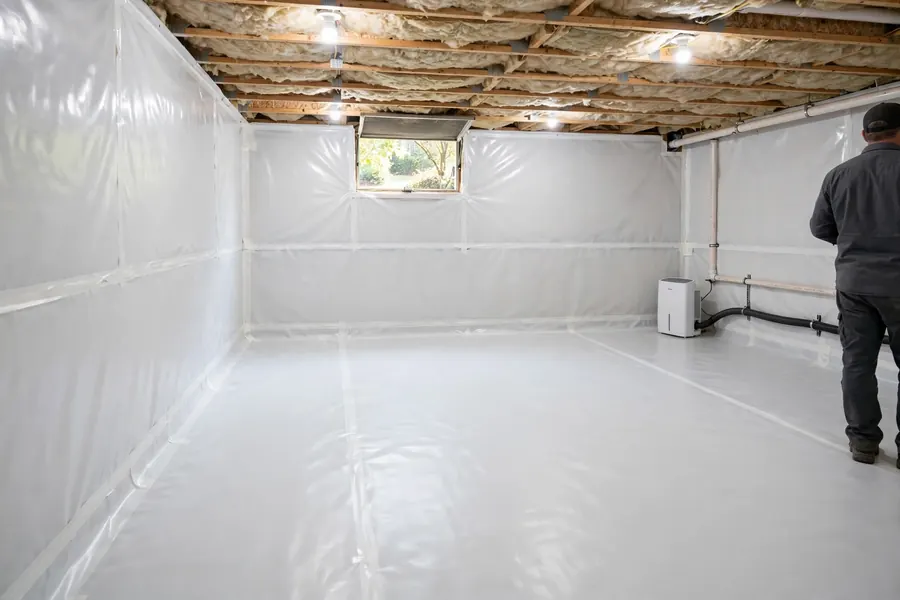
Vented crawl space in a humid summer
Open vents were meant to dry a crawl space. In a McLean summer they often do the opposite: humid air comes in through the vents and condenses on cool joists and subfloor, so the space stays damp all season. Add a missing or torn vapor barrier, a dryer vent that ends in the crawl space instead of outside, or a slow plumbing drip from above, and the joists stay wet enough for growth.
The order that matters: remove the growth, then control the moisture — vapor barrier or encapsulation options, dehumidification, and drainage where water is actually entering. Encapsulation is priced as a range in your written scope, not a flat figure, because the size, access, and drainage work differ house to house.
What changes after crawl space mold remediation?
Homeowners usually report two things: the musty smell upstairs disappears, and the floors feel more solid and comfortable — less clammy in August. A dry crawl space also protects the structure itself: joists, subfloor, and the insulation keeping your floors warm in winter.
Which Northern Virginia homes still have vented crawl spaces?
More than you would think. The 1950s ramblers of Pimmit Hills were built on vented crawl spaces as standard practice, and the family-room and kitchen additions grafted on over the decades usually got their own vented crawls too. Lewinsville's split-levels and Chesterbrook's brick ranchers have them under additions and bump-outs. Even some newer infill kept a vented section where the original foundation remained. If your home has an addition and you have never looked underneath it, there is a good chance it is vented — and in our climate, vented means it has been breathing humid summer air for years.
The tell is usually upstairs: a musty smell in the rooms above the addition every August, floors that feel clammy, or insulation sagging when you peek through the access. During the inspection we document vent count and placement, ground cover (or the lack of it), drainage toward or away from the foundation, and any plumbing running through the space — because the encapsulation decision depends on all four, not just the vents.
McLean's rambler streets make this a neighborhood-scale pattern, not a one-house problem. When we find a vented crawl with moisture issues on one block, the neighboring homes usually share the same original construction — which is why our inspections in McLean's older neighborhoods always include the crawl space, even when the complaint is about a bedroom two floors up. Documenting one home's crawl space often tells us exactly what to expect two doors down.
What does crawl space encapsulation cost in Northern Virginia?
Full encapsulation typically runs $5,000–$15,000, averaging around $5,500 nationally — NOVA runs higher because of access constraints and the extra drying work our summers demand. Here is where the money actually goes:
| Component | Typical range |
|---|---|
| Inspection | $100–$250 |
| Vapor barrier (12–20 mil) | $1,200–$4,000 |
| Vent sealing | $150–$450 |
| Commercial dehumidifier (auto-drain) | $1,000–$3,500 |
| Wall insulation | $500–$3,700 |
| Sump pump (if needed) | $600–$1,800 |
By size: roughly $1,500–$3,500 for a 500 sq ft crawl at base level, $6,800–$12,100 for a 1,000 sq ft full system. Mold remediation before encapsulation is separate — typically $500–$4,000 for the crawl alone — because sealing over active growth traps the problem instead of solving it. That order is non-negotiable: active growth must be addressed before any vapor barrier goes down.
Vapor barrier tiers: what you are actually buying
Not all poly is equal, and the cheap stuff fails on schedule:
| Tier | Lifespan | Best for |
|---|---|---|
| 4-mil polyethylene | 5–7 years | Budget jobs; expect replacement |
| 6-mil / cross-laminated | 10–15 years | Mid-range; solid value |
| 20-mil reinforced | 20+ years | Severe moisture; permanent fix |
Upgrading from 4-mil to 20-mil adds roughly $0.50–$1.50 per sq ft. Given that the labor to install it dwarfs the material cost, the premium barrier is almost always the better buy — you do not want to pay for the installation twice.
Why the dehumidifier is not optional here
Northern Virginia summers push outdoor humidity above 70% from May through September. Warm humid air entering a cool crawl space condenses on pipes, joists, and ductwork — unencapsulated crawls routinely reach 80% relative humidity. A sealed space without mechanical drying just becomes a sealed humid space.
The component homeowners defer most often is the dehumidifier — a 70–100 pint ducted unit runs $1,200–$2,000 ($1,500–$2,500 installed) for a 1,000 sq ft crawl. Deferring it is a false economy: installing it after the fact costs more, and the months without it undo the encapsulation's work. If wood moisture readings come back above 19%, that is active water intrusion that must be resolved before any encapsulation scope begins.
The order that matters: dry, remediate, then seal
Encapsulation over active growth or unresolved water is the most expensive mistake in this space. The sequence we scope is always: fix drainage and water intrusion first, remediate the active growth, then encapsulate with the barrier, vent sealing, and dehumidification as one system. McLean's clay-heavy soil drains slowly and keeps water against the foundation long after storms — which is why the inspection documents drainage, ground cover, plumbing, and vent placement before we recommend anything. The barrier is the last step, not the first.