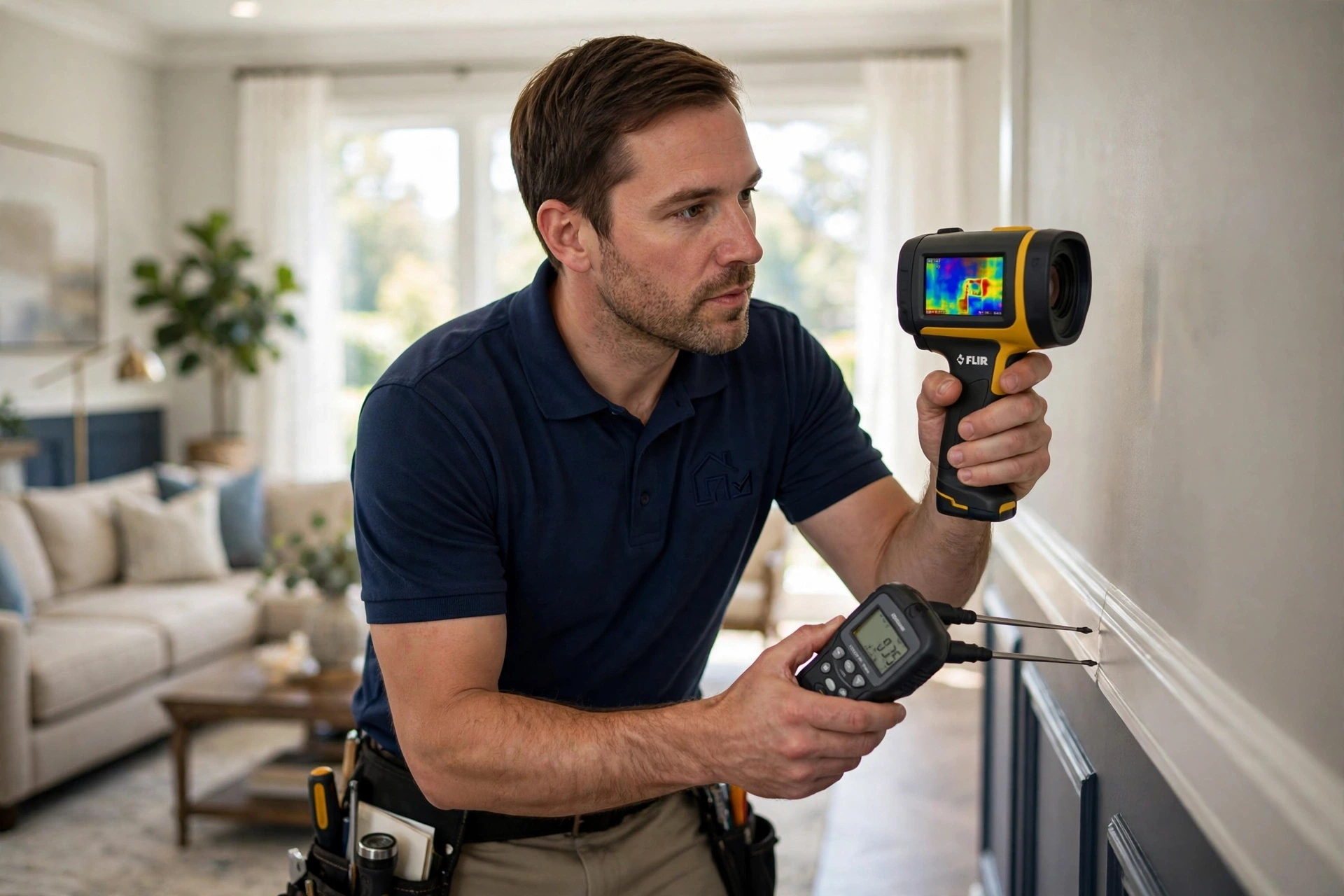
What happens during a mold inspection in McLean, VA?
We walk the whole house — not just the spot you're worried about. Basements and crawl spaces first, then attics, bathrooms, laundry areas, and anywhere plumbing runs through walls. We take moisture readings with meters, look for staining and visible growth, check grading and drainage outside, and trace how water might be getting in. In a 1950s rambler in Vienna or a split-level in Falls Church, that often means finding the one failed detail — a disconnected downspout, a sump that can't keep up — behind a much bigger symptom.
When is mold testing worth it?
Testing means air or surface samples analyzed by an independent lab. It's worth it when you suspect hidden growth you can't see, when you need documentation for a real-estate transaction, or when you want post-remediation verification with lab backing. It's not worth it when there's visible growth with an obvious moisture source — in that case, the money is better spent on the fix. We'll tell you which situation you're in, straight.
Should McLean sellers get a mold inspection before listing?
Here's the local reality: at McLean's median home price, a buyer's home inspector writing "suspected microbial growth" can crater a deal or trigger a five-figure credit demand. Sellers from Langley to Great Falls call us for pre-listing inspections so they can remediate on their own timeline and hand buyers clean paperwork. Buyers call us when an inspection flags something in that dream colonial off Chain Bridge Rd — we give you a real scope and a real number, which is far more useful at the negotiating table than a vague fear.
What do you get after a mold inspection?
A plain-English report: what we found, where the moisture is coming from, what we'd do about it, and what it costs — fixed, in writing. If the honest answer is "this is minor, here's what to watch," we'll say that too. No obligation, no pressure, no scare tactics.