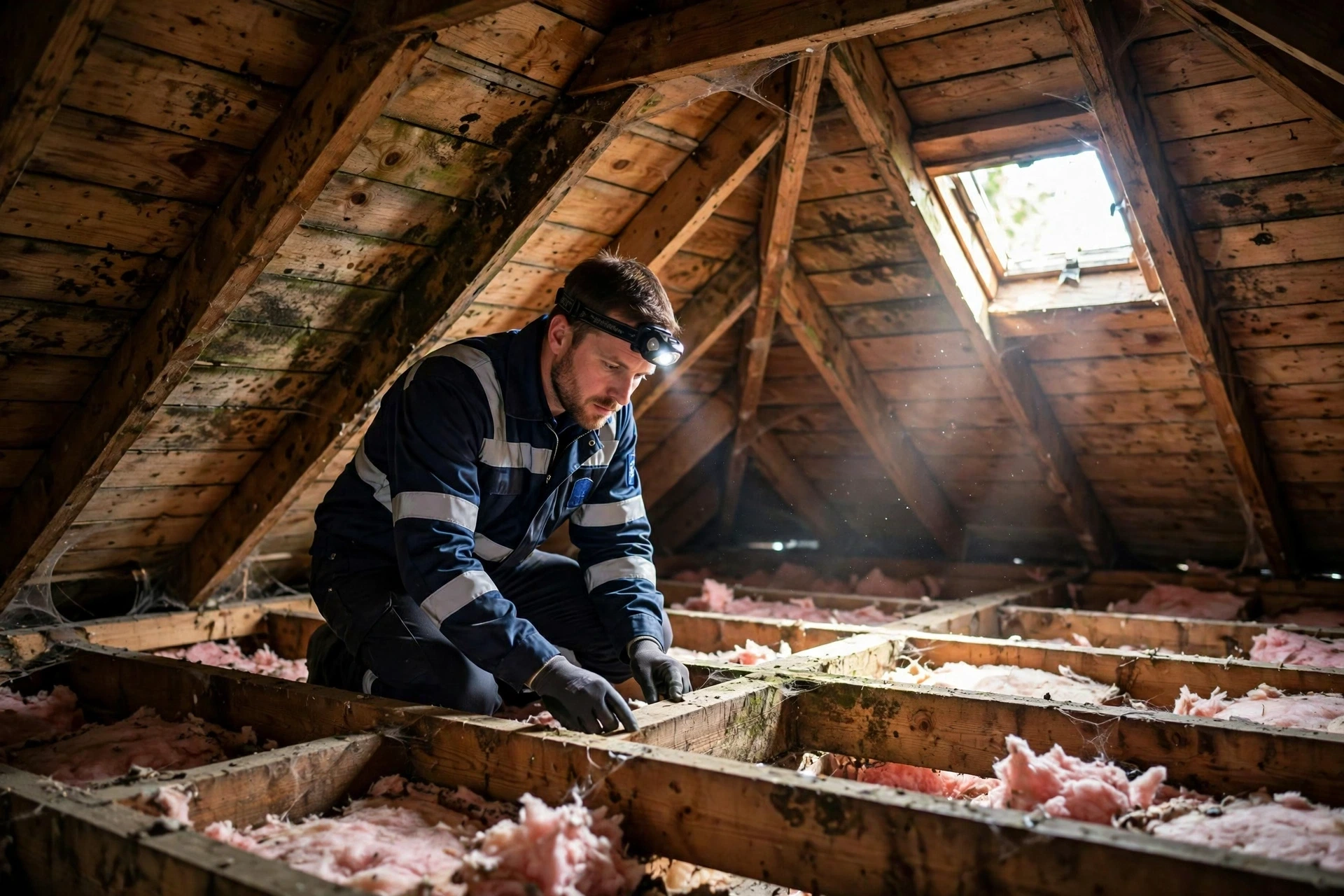
What causes attic mold in older McLean, VA homes?
It's not usually the dramatic roof leak — it's the bath fan. In 1950s–70s colonials and ramblers from Chesterbrook to Falls Church, bathroom exhaust fans were routinely vented straight into the attic instead of outside. Every shower pumps warm moist air onto cold roof sheathing all winter; come summer, the sheathing shows the classic dark staining across the north slope. We find this weekly. The fix is straightforward — proper ducting to the exterior — but the remediation has to happen too.
What other moisture sources cause attic mold?
Roof leaks around flashing, valleys, and aging pipe boots after wind-driven rain — common along the Georgetown Pike corridor's older housing stock. Condensation from unbalanced ventilation: blocked soffit vents under new insulation, or a ridge vent installed without intake. And occasionally, the HVAC air handler sweating in an unconditioned attic through NoVA's humid summers. The inspection identifies which one (or which combination) is feeding your growth, because each has a different fix.
How does attic mold removal work in McLean, VA?
Contained access through the hatch or pull-down, HEPA-filtered negative air, careful cleaning of affected sheathing and framing — attics are usually a cleaning job rather than a tear-out, since roof sheathing is structural. Then the source correction: bath fan re-venting, ventilation balancing, or roofer referral for active leaks (we'll tell you honestly when you need a roofer, not us). Final verification with moisture readings before we close up.
How does attic mold affect a Northern Virginia home sale?
Attic mold is one of the most common flags on Northern Virginia home inspection reports — inspectors photograph the sheathing staining and buyers panic. If you're selling, handling it before listing with documentation in hand turns a deal-killer into a non-issue. If you're buying, a professional scope gives you the real number behind the scary photo.