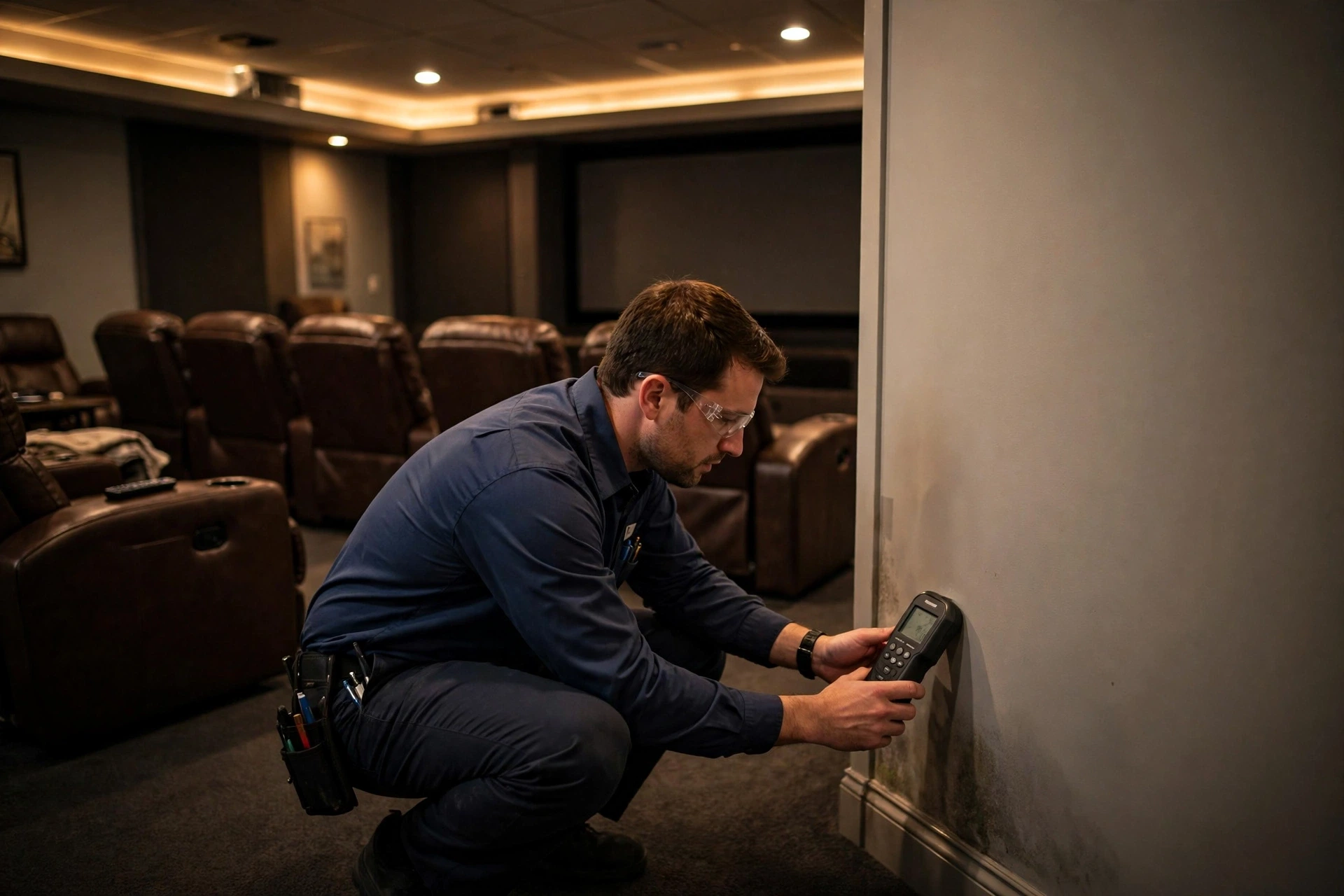
How do you remediate a finished basement without gutting it?
We remove only what can't be salvaged — typically the affected drywall run and the insulation behind it — and HEPA-vacuum and clean the framing and masonry, all inside sealed containment with HEPA-filtered negative air. In McLean's 1950s–70s brick colonials and split-levels, the finished basement is often the best room in the house: the theater room in Evanswood, the in-law suite in Chesterbrook, the home office that's been someone's full-time workplace since 2020. When mold takes hold behind that drywall, it's not a storage-room problem — it's a five-figure renovation at risk. Our containment and removal process is designed around finished space: sealed zones, HEPA-filtered negative air, careful section-by-section removal, and daily cleanup so the rest of your home stays livable.
Why do McLean, VA basements get wet?
Five usual culprits: sump pumps that quit — or never existed — when a spring nor'easter drops inches of rain overnight. Grading on sloped lots in Lewinsville, Potomac Hills, and West McLean that directs water toward the foundation. Downspouts discharging right at the footing. Hydrostatic pressure pushing moisture through older block or poured walls along Old Dominion Dr. And the quiet one: a finished basement sealed up tight with no dehumidification, where humid NoVA summer air condenses on the cool foundation walls behind the drywall for months.
What does basement mold removal in McLean, VA involve?
After the on-site inspection maps the growth and the water path, the written scope typically includes: containment of the affected area, removal of unsalvageable drywall/insulation in sections, HEPA vacuuming and antimicrobial cleaning of framing and masonry, and — critically — the moisture correction. That might mean a sump pump replacement or backup, regrading recommendations, downspout extensions, or a properly sized dehumidifier. We fix causes, not just symptoms.
How do you keep a McLean basement dry after remediation?
We'll leave you with plain-English guidance: what humidity level to hold, where to watch after the next big storm, and when to call us back for a recheck. Most of our basement clients never need us twice — that's the goal.