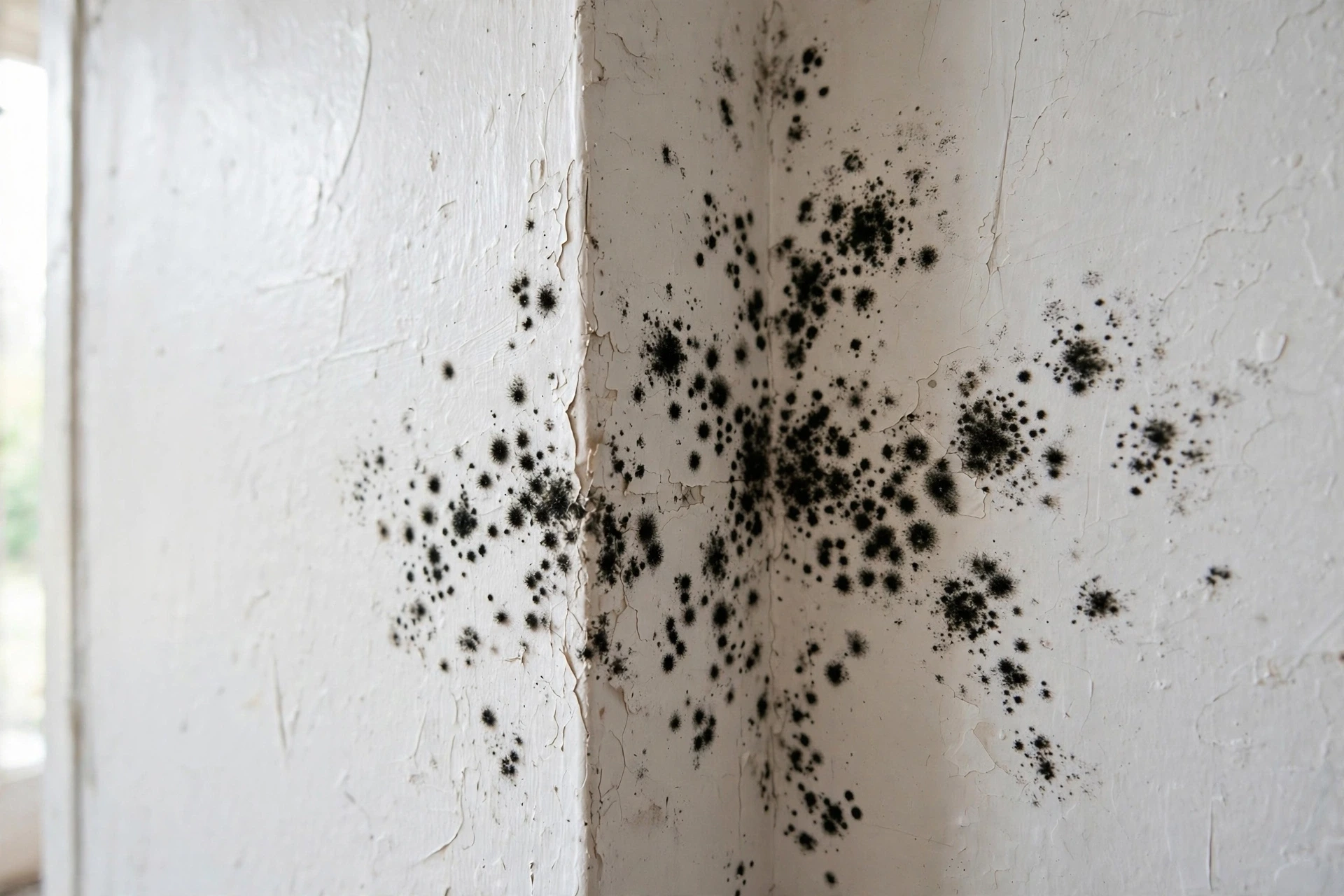
What is "black mold," really?
"Black mold" is a color description, not a species. Several common molds look dark or black, and color alone cannot identify what's growing — only lab testing can do that. What actually determines your plan isn't the color; it's how much there is, where it is, and what moisture is feeding it. Any company that tries to frighten you with the phrase instead of measuring those three things is selling fear, not remediation.
Where does dark mold grow in McLean, VA homes?
The usual suspects: behind finished basement walls in Chesterbrook colonials where a slow foundation seep went unnoticed, on the back of drywall in Pimmit Hills additions built over vented crawl spaces, around aging HVAC air handlers in Lewinsville split-levels, and in attics where a bath fan has been pumping shower steam into the rafters for years. Dark staining on framing or sheathing is common in homes along the Potomac-facing slopes — humidity plus a small, steady moisture source is all it takes.
How is black mold removal done in McLean, VA?
Same disciplined process as any remediation: an on-site inspection to map the extent and find the moisture, a written scope with a fixed price, sealed containment with HEPA-filtered negative air, careful removal of what can't be salvaged, thorough cleaning of what can, and correction of the moisture source. If you want lab identification of the species — for a real-estate file or your own peace of mind — we can arrange testing through an independent lab.
What should you not do when you find dark mold?
Don't scrub a large area with bleach and no containment — you'll aerosolize spores through the whole house. Don't ignore it because someone told you "all mold is harmless," and don't panic because someone told you the opposite. Get it assessed by someone who measures first and talks straight.