Why do crawl spaces grow mold in McLean and Vienna?
Because warm, humid NoVA summer air flows through the vents of older additions, hits cool ductwork and floor joists, and condenses. Vented crawl spaces under those additions are a McLean-area classic — the family room bump-out on a Pimmit Hills rambler, the expanded kitchen on a Vienna split-level, the in-law addition in Falls Church. Add a plumbing drip or poor exterior drainage and you have a mold farm under the house that announces itself as a musty smell in the rooms above or springy-feeling floors.
What does crawl space mold removal in McLean, VA involve?
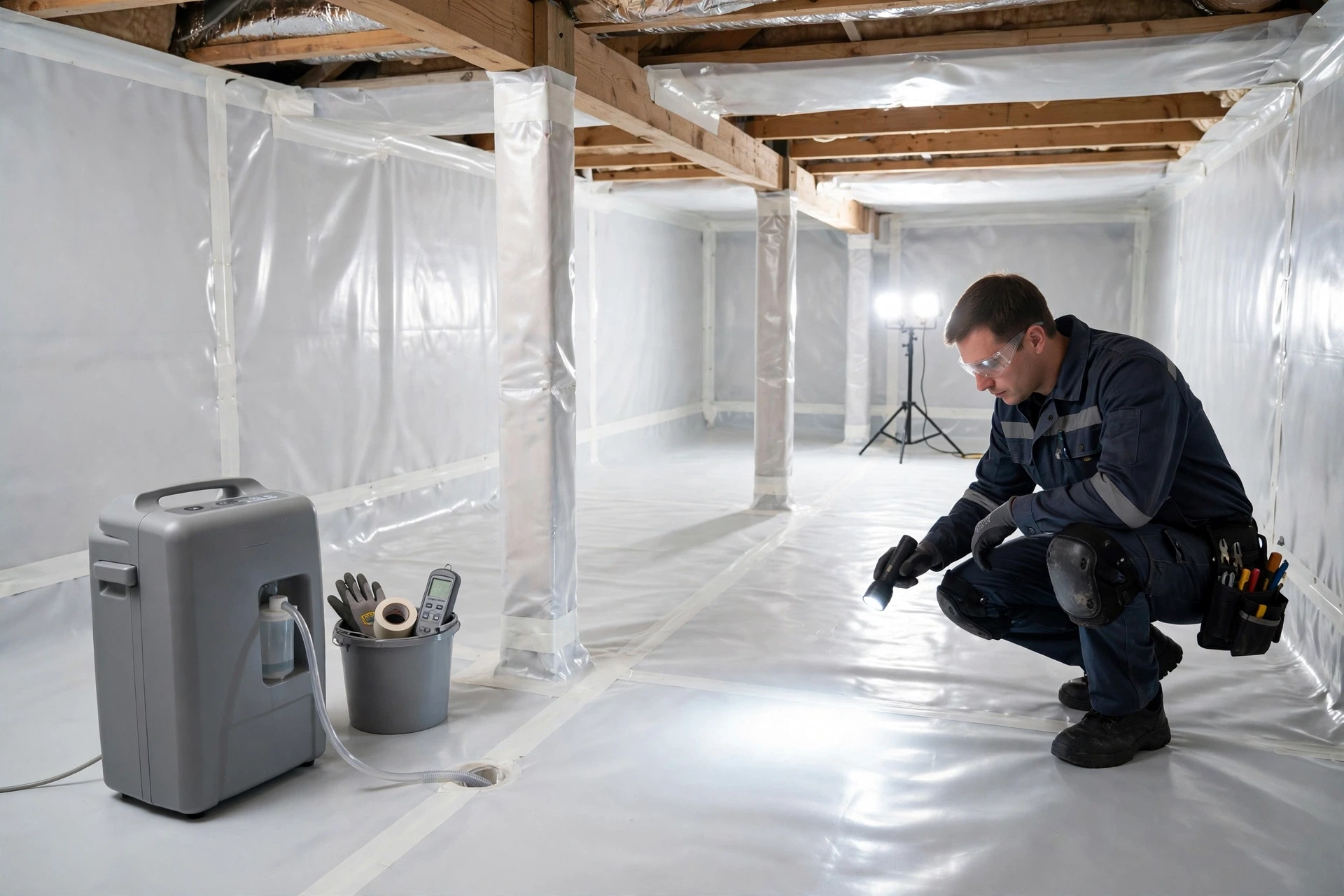
Crawl space work is methodical: contained access, removal of affected insulation and debris, HEPA vacuuming of joists and subfloor, cleaning of salvageable wood, and then the moisture correction that actually matters. Depending on what the inspection finds, that ranges from a properly installed vapor barrier and sealed vents to drainage improvements to full encapsulation with dehumidification. We scope what your crawl space needs — not a one-size package.
Should a crawl space be vented or sealed in Northern Virginia?
Building science has moved on from the old "vents keep it dry" idea — in our humid climate, open vents often import moisture all summer. But encapsulation isn't automatically right for every house either; it depends on your foundation, drainage, and HVAC setup. During the inspection we'll explain both options for your specific crawl space, with real numbers, and let you decide.
What changes after crawl space mold remediation?
Homeowners usually report two things: the musty smell upstairs disappears, and the floors feel more solid and comfortable — less clammy in August. A dry crawl space also protects the structure itself: joists, subfloor, and the insulation keeping your floors warm in winter.